
Welcome To My School Study
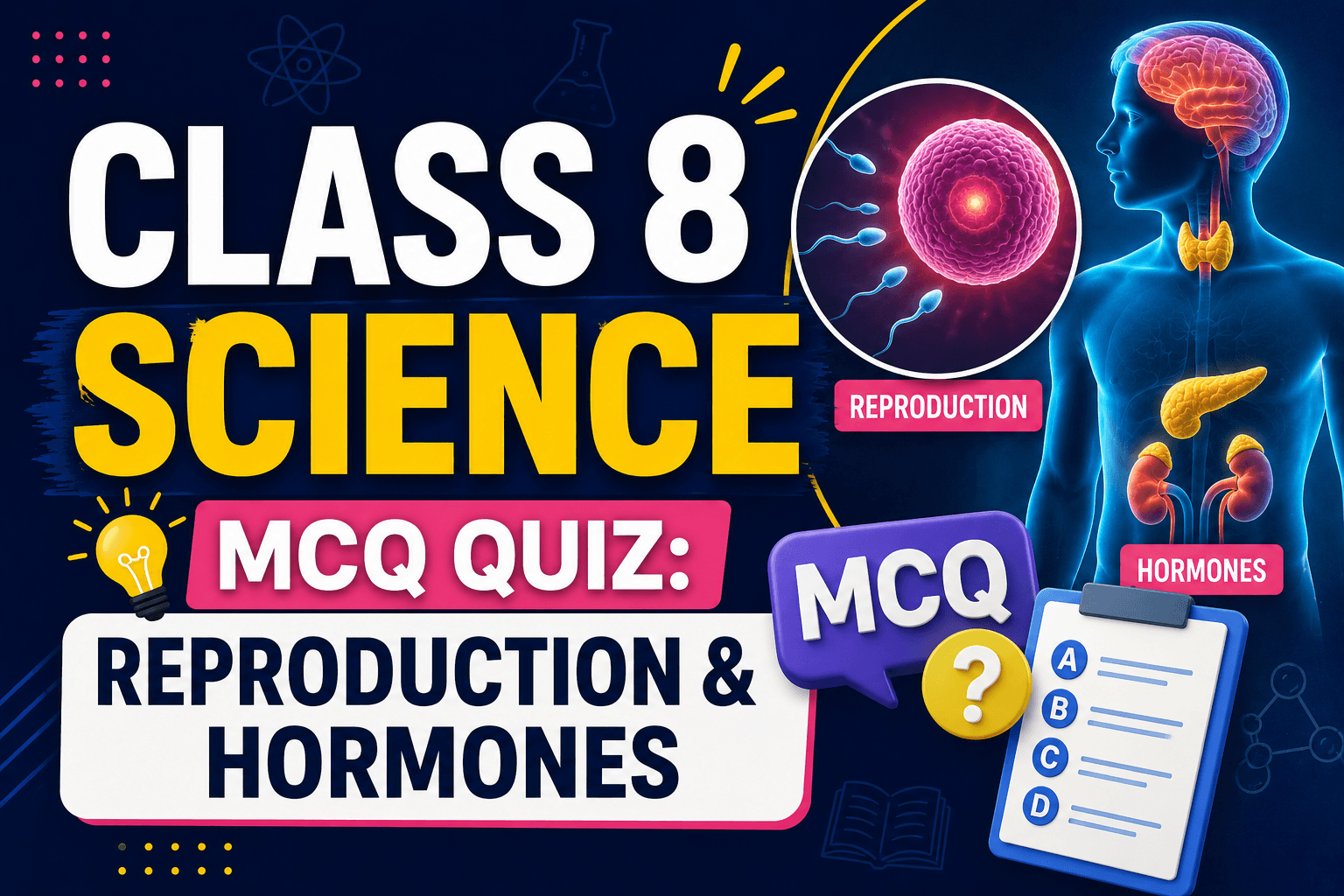
Class 8 Science MCQs on metamorphosis, hormones, thyroxine, pancreas, insulin, adolescence, and human reproduction with detailed explanations.
Do You Know
Q1. The change from larva to adult is called?
Correct Answer: Metamorphosis
Detailed Explanation:
Metamorphosis is the biological process through which an organism undergoes a remarkable change in its body structure and appearance during its life cycle. In many animals, the young stage looks completely different from the adult stage. During metamorphosis, the body develops new organs and structures while some old structures disappear.
A common example is the life cycle of a frog. A frog begins its life as an egg, which hatches into a tadpole. The tadpole lives in water, breathes through gills, and has a tail. As it grows, it develops legs, lungs, and other adult features. Eventually, it transforms into an adult frog capable of living both on land and in water.
Similarly, butterflies undergo metamorphosis through four stages: egg, larva (caterpillar), pupa, and adult butterfly. This process helps organisms adapt to different environments and life stages.
Metamorphosis is an important concept in Class 8 Science because it explains growth and development in many living organisms.
Real-Life Examples:
- Tadpole changing into an adult frog.
- Caterpillar transforming into a butterfly.
- Mosquito larva developing into an adult mosquito.
Important NCERT Points:
- Metamorphosis involves major physical changes.
- Frogs and butterflies show metamorphosis.
- Hormones help control the process.
- Larval and adult stages often look very different.
Exam-Oriented Fact:
The transformation of a tadpole into a frog is a classic example of metamorphosis.
Quick Revision Line:
Metamorphosis is the transformation of a larva into an adult organism.
Q2. Which hormone balances the salt content in the blood?
Correct Answer: Adrenaline
Detailed Explanation:
The adrenal glands are endocrine glands located above the kidneys. They produce several hormones that help the body respond to different situations. One of the important hormones secreted by these glands is adrenaline.
Adrenaline is often called the “emergency hormone” because it prepares the body to deal with stressful situations, danger, excitement, or fear. It increases heart rate, breathing rate, and blood flow to muscles, allowing the body to react quickly.
According to the Class 8 NCERT curriculum, adrenal hormones also help regulate the balance of salts and water in the body. Maintaining the proper concentration of salts is important for normal functioning of muscles, nerves, and body cells.
The endocrine system works continuously to maintain internal balance in the body. Hormones act as chemical messengers and travel through the bloodstream to target organs. Any imbalance in hormone production can affect normal body functions and overall health.
Real-Life Examples:
- Feeling alert during an emergency situation.
- Increased heartbeat during fear or excitement.
- Quick body response while playing sports.
Important NCERT Points:
- Adrenal glands are located above the kidneys.
- Adrenaline is known as the emergency hormone.
- Hormones are chemical messengers.
- Adrenal hormones help maintain body balance.
Exam-Oriented Fact:
Adrenaline prepares the body for emergencies and rapid action.
Quick Revision Line:
Adrenaline is an important hormone produced by the adrenal glands.
Q3. Deficiency of Thyroxine causes which disease?
Correct Answer: Goitre
Detailed Explanation:
Thyroxine is a hormone produced by the thyroid gland, which is located in the neck region. This hormone plays a major role in controlling the body’s metabolism, growth, and development. It helps regulate how the body uses energy and supports normal physical growth.
The production of thyroxine requires iodine. If a person’s diet lacks sufficient iodine, the thyroid gland cannot produce enough thyroxine. As a result, the thyroid gland enlarges in an attempt to produce more hormone. This abnormal enlargement of the thyroid gland is known as goitre.
People suffering from goitre may develop swelling in the neck area. To prevent this condition, iodized salt is commonly used because it provides the iodine needed for normal thyroxine production.
The use of iodized salt has significantly reduced cases of goitre in many countries. This topic is frequently included in school examinations because it connects nutrition, hormones, and health.
Real-Life Examples:
- Consumption of iodized salt prevents iodine deficiency.
- Swelling in the neck is a common sign of goitre.
- Public health campaigns promote iodine-rich diets.
Important NCERT Points:
- Thyroxine is produced by the thyroid gland.
- Iodine is necessary for thyroxine production.
- Deficiency of iodine may cause goitre.
- Iodized salt helps prevent the disease.
Exam-Oriented Fact:
Goitre is commonly caused by iodine deficiency in the diet.
Quick Revision Line:
Lack of iodine leads to low thyroxine production and causes goitre.
Q4. The sex of an unborn child is determined by?
Correct Answer: Father
Detailed Explanation:
In humans, the sex of a child is determined by chromosomes. Every human cell contains chromosomes that carry genetic information. The sex chromosomes are responsible for determining whether a child will be male or female.
Females have two X chromosomes (XX), while males have one X chromosome and one Y chromosome (XY). During reproduction, the mother always contributes an X chromosome through the egg. The father contributes either an X chromosome or a Y chromosome through the sperm.
If a sperm carrying an X chromosome fertilizes the egg, the child will have XX chromosomes and will be female. If a sperm carrying a Y chromosome fertilizes the egg, the child will have XY chromosomes and will be male.
Therefore, the sex of the child is determined by the father’s sperm and not by the mother. Understanding this scientific fact helps eliminate social misconceptions regarding gender determination.
Real-Life Examples:
- Human sex determination depends on chromosomes.
- Mothers always contribute an X chromosome.
- Fathers contribute either X or Y chromosomes.
Important NCERT Points:
- Females have XX chromosomes.
- Males have XY chromosomes.
- The father’s chromosome determines the sex of the child.
- Sex determination is a natural biological process.
Exam-Oriented Fact:
The Y chromosome from the father leads to the birth of a male child.
Quick Revision Line:
The father’s sperm determines the sex of the unborn child.
Q5. Pancreas secretes which hormone?
Correct Answer: Insulin
Detailed Explanation:
The pancreas is an important gland located behind the stomach. It performs both digestive and endocrine functions. As an endocrine gland, it secretes the hormone insulin, which plays a vital role in regulating blood sugar levels.
When we eat food, glucose enters the bloodstream. Insulin helps body cells absorb and use this glucose for energy. It also helps store excess glucose in the liver and muscles for future use. In this way, insulin maintains a healthy balance of sugar in the blood.
If the pancreas does not produce enough insulin, blood sugar levels rise abnormally, leading to diabetes. Diabetes is a common health condition that requires proper treatment, healthy eating habits, and regular monitoring.
The discovery of insulin has helped millions of people manage diabetes effectively. Understanding the role of insulin is essential for learning how hormones control body functions.
Real-Life Examples:
- Blood sugar increases after meals.
- Insulin helps cells use glucose for energy.
- Diabetic patients often monitor blood sugar levels regularly.
Important NCERT Points:
- Pancreas secretes insulin.
- Insulin controls blood glucose levels.
- Insufficient insulin may cause diabetes.
- Hormones regulate important body functions.
Exam-Oriented Fact:
Insulin is the hormone responsible for maintaining normal blood sugar levels.
Quick Revision Line:
The pancreas secretes insulin to regulate blood glucose levels
Related links
- Class 8 MCQ Questions Answers – History, Civics, Geography
- Class 8 MCQ Questions with Answers– History, Civics, Geography
Latest Posts
- Class 10 Science MCQs with Answers | Light & Electricity
- Class 7 Science: Heat, Temperature, Conductors
- Class 9 Science MCQ Quiz: Matter, Motion, Work, Ions and Tissues
- Class 8 Science MCQ: Friction, Fluid Friction
- Class 8 Science MCQ Quiz: Reproduction & Hormones
Join Our Other Communities